Metamorphoses
Rijksmuseum
6 February - 26 May 202622-06-2026
Yes, at 3:30pm on a Saturday, I would expect that a national museum and major tourist destination would be busy. But “Metamorphoses” at the Rijksmuseum was packed with people to the effect that I felt like I was navigating through a concert crowd—! I’m not going to complain about tourists, but I wondered what they could see of the exhibition besides each other.
The European national museum is always a colonial soft power play, with its collection that spans hundreds of years of art history displayed for the tourists’ enjoyment; a teaching tool in the name of cultural transmission. I understood before arriving that the exhibition was going to display a breadth of artworks which engaged Ovid’s epic poem and described how those myths are at the foundation of “our” European heritage. I might be arguing that European heritage is universal, even if only by way of being constituted from the fallout of their traumatic colonial projects. What I mean: long ago, I was indoctrinated into a love of Fine Art, and I don’t even regret it. My heart belongs, as they say, to Daddy.
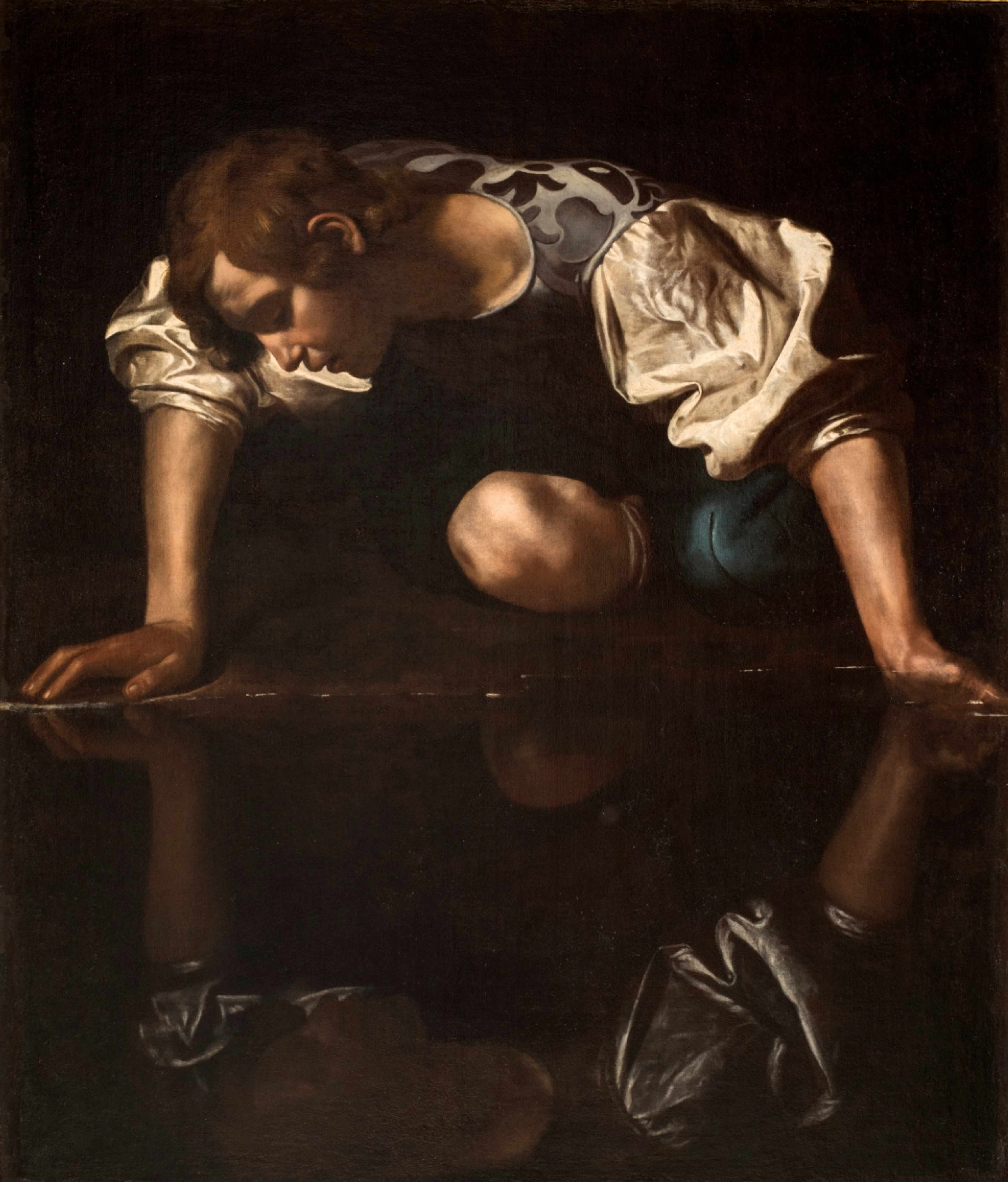
In other words, visiting “Metamorphoses” seemed like a good idea because I’ve been bitten and now I’m a Rrrrromantic. I love an origin myth, I love poetic verse, I love skirting the rim edge of the deep field of classical and ancient literature. Though, at my level, my attention can for sure be called appreciation but nowhere near expertise. It’s all Greek to me: while preparing this review I did some tangential googling about my favorite “old book,” Euripides’ The Bacchae. I had always thought that Euripides and Ovid were contemporaries, but in fact The Bacchae predates Ovid’s Metamorphoses by some 500 years. As Raymond Williams once wrote, if we try to pinpoint exactly when antiquity was, we usually cannot find it, we always find something older. All this to say, I didn’t (and still really don’t, after visiting the exhibition) know anything about Ovid or ancient Roman and Greek literature other than what I’ve read previously and liked and lifted to shape little twirls in my own formulations of language into arts.
I went to the show expecting to enjoy a collection of “old” paintings and sculptures, organized and displayed in a way that also might help me to enjoy Ovid’s text and perhaps receive some effervescent inspiration towards my own endeavors in narrative verse. Usually, I enjoy paintings by looking at them. Sometimes for just a quick moment, and other times, for a long while, looking at them. But at 3:30pm on this Saturday in the Rijksmuesum’s “Metamorphoses,” all that transformed was my amateurish excitement into frustration.
Because, yes, I would expect a weekend afternoon at a museum to be busy. But suffice to say that whatever the Rijksmuseum considers to be the maximum number of people that can fit in a nine-room show, that number is too high. Contemplation and engagement are the main feature in the origin myth of what constitutes the exhibition format itself. Especially in a group show, where the touchpoints of connection between otherwise disparate works are meant to reveal a theme, I think it’s a big failure if it’s hard to see what’s on display.
Are professional commentators or internal stakeholders of the museum going to look back on this show and summarize that it was successful and important because it sold out and was overcrowded? Or was I, now a professional battling back the multi-headed beasts of burnout and cynicism, supposed to attend at a different time than the general audience to see and interpret the work how I would have liked to?
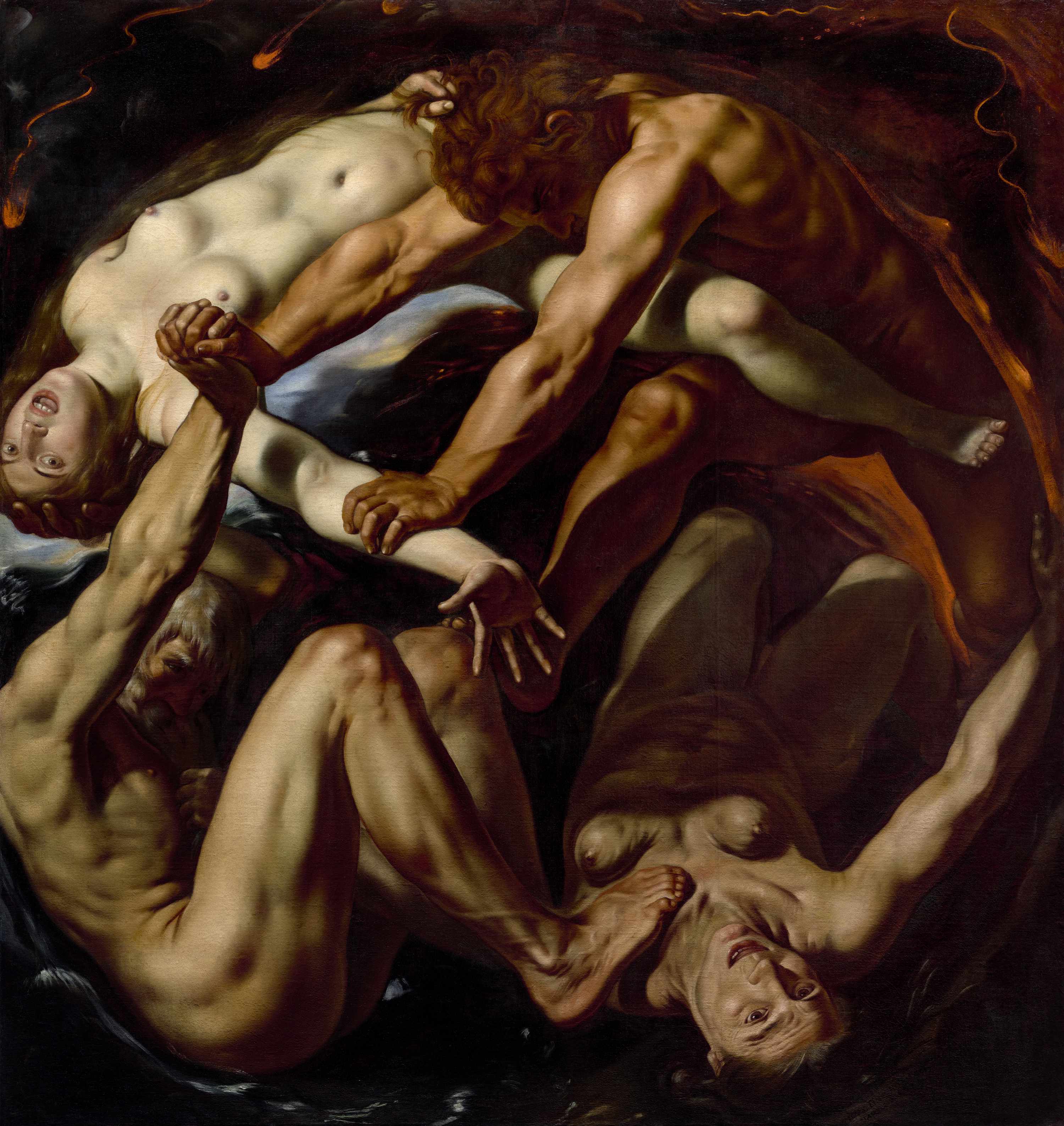
I wonder when exactly that origin point was, in my lifelong romance with art? When was that time when I transformed from a Fine-Art-loving-tourist into a Fine-Art-critiquing-cultural-worker? And what happened at the Ovid show to make my transformation into tourist,so disquieting? Art history education—the vessel through which thou rideth from thy life of the hobbyist for that of the worker—intends to banish our tourist inclinations, replacing appreciation with knowledge. Those moments when we "students of art history" might return to the whimsies of art tourism can be exciting. It can also be exhausting, a displeasure, like waiting in line to see the pyramids of Giza. And “Metamorphoses” grated on me, no matter which version of myself I felt into. The promise of the show, how it was advertised, reversed my art history education, and turned me back into a tourist, into a visitor. But being there, I realized that I could not undo my position as an art worker, and so all I saw was the system behind a “blockbuster” group show and its crowd.
It wasn’t all bad. Even with only the cursory glances I was afforded, I appreciated learning that so many of the mythic characters that are pervasive in “old” paintings are adapted from Metamorphoses like that of Narcissus, or Minerva and Medusa, or Leda and the Swan: characters so pervasive that I would consider their depiction constitutional to what makes the aesthetic of “classical” painting appear as a distinct style. I was compelled, by revisiting the epic tale, to acknowledge—and postulate—that the foundations of European cultural habits derive from or are post-rationalized by these origin myths. Or in other words, as summarized by the title of one of the books available in the museum shop: The Greek Myths that Shape the Way We Think.
The inclusion of Brancusi, Bourgeois and other 20th century artists in the exhibition suggested that these myths—about creation, about death and loss, about narcissism—are still alive in the present moment for artists working into, against, or within their European cultural heritage. Yet, I was still irked by the inclusion of modern and contemporary works in this show, feeling each time that I encountered one, that they facilitated a flat comparison within the overall thematic or, worse, were a big stretch that felt more like canonical politics than sincere resonance.
For example, one such contemporary work was documentation of Ana Mendieta’s Birth (Gunpowder) Works), 1981, in the show’s second room, which pointed to themes of birth and chaos. The inclusion of Mendieta in this show struck me as a major gentrification of the Afro-Cuban lineage she was conjuring in her works (although I did just consider above that we might all be European even if just through traumatic brushes with its colonial projects). Thinking of the narrative arc of how Mendieta is remembered, I would locate my “old days” at Stephanie Rosenthal’s Hayward Gallery 2013 retrospective, when Mendieta was “little known” or “underappreciated,” and due posthumous justice. Now in 2026, I suppose that we are at the phase in Mendieta’s posthumous lore where she joins the postcard artists as a prolific maker of masterpieces. Perhaps liberal feminism would have me excited about this, as a transcendence, yet I felt nothing but deep sorrow.
Furthermore, I wished for works that were not there. Speaking as a professional and tourist alike, I think that because Titian’s “Poesie” series is arguably the most significant representation of Metamorphoses in Western art history, then if it’s too hard to get the “Poesie” for the “Metamorphoses” show then you change the dates or you get drawings. I found out on the internet later that Peter Paul Rubens made a copy of Titian’s Rape of Europa that hangs in the Prado in Madrid. Rubens’ tiny painting of Narcissus was a pleasant highlight, and I was further delighted to learn from the wall text that PPR did some 60 or so paintings based on Metamorphoses. Fine, can’t get Titian?! Why not fill the rooms with Rubens!
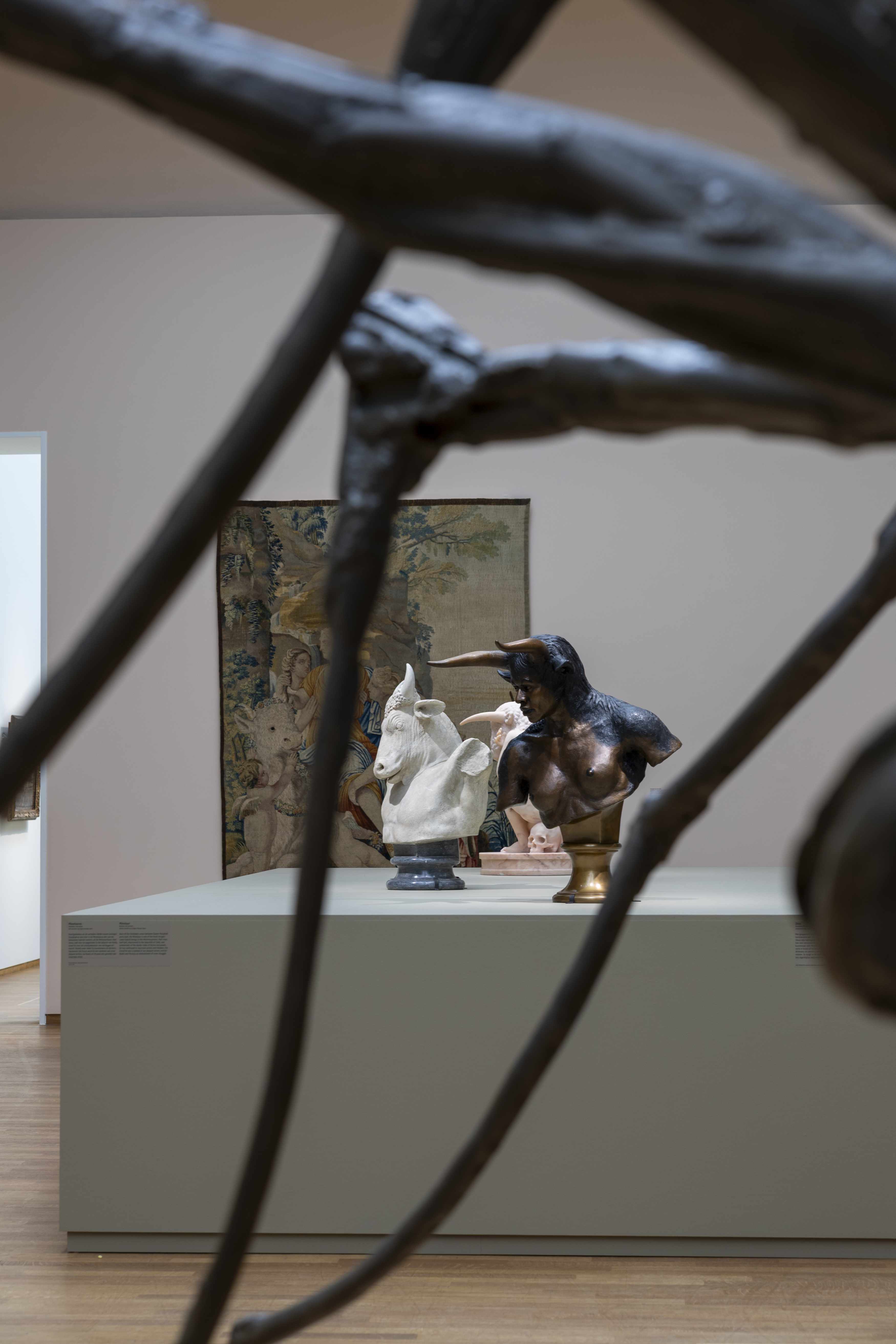
Devoted readers of Tangents might wonder why I’ve gone so Gossip Girl, XOXO. And true, it might have been worth me fighting to facilitate for myself a deeper read. I would have enjoyed this exhibition inside a library display, perhaps as a multi-year series with a few weeks for each of Ovid’s 15 books—pairing paintings or drawings and sculpture directly with text. In my dream version of this show, one could sit and read a few lines from Metamorphoses. But a library vitrine would have been no blockbuster. And so, in the place of a better exhibition, I watched many small groups of visitors shuffle through the galleries as if on a conveyor belt, hooked up to their audio guides, occasionally pausing. In this setting, I found it hard to believe anyone could be transformed.