Winnie Herbstein “We Need to Speak About Living Room”
Casco Art Institute: Working for the Commons; Kunsthuis SYB
11 April - 14 June 2026; 28 March - 27 June 202618-05-2026
On my way to Utrecht, I found myself asking questions; questions I both hoped for and feared the answers to:
What does it mean to live together?
Who can live together?
Who wants to live together?
Who forbids living together?
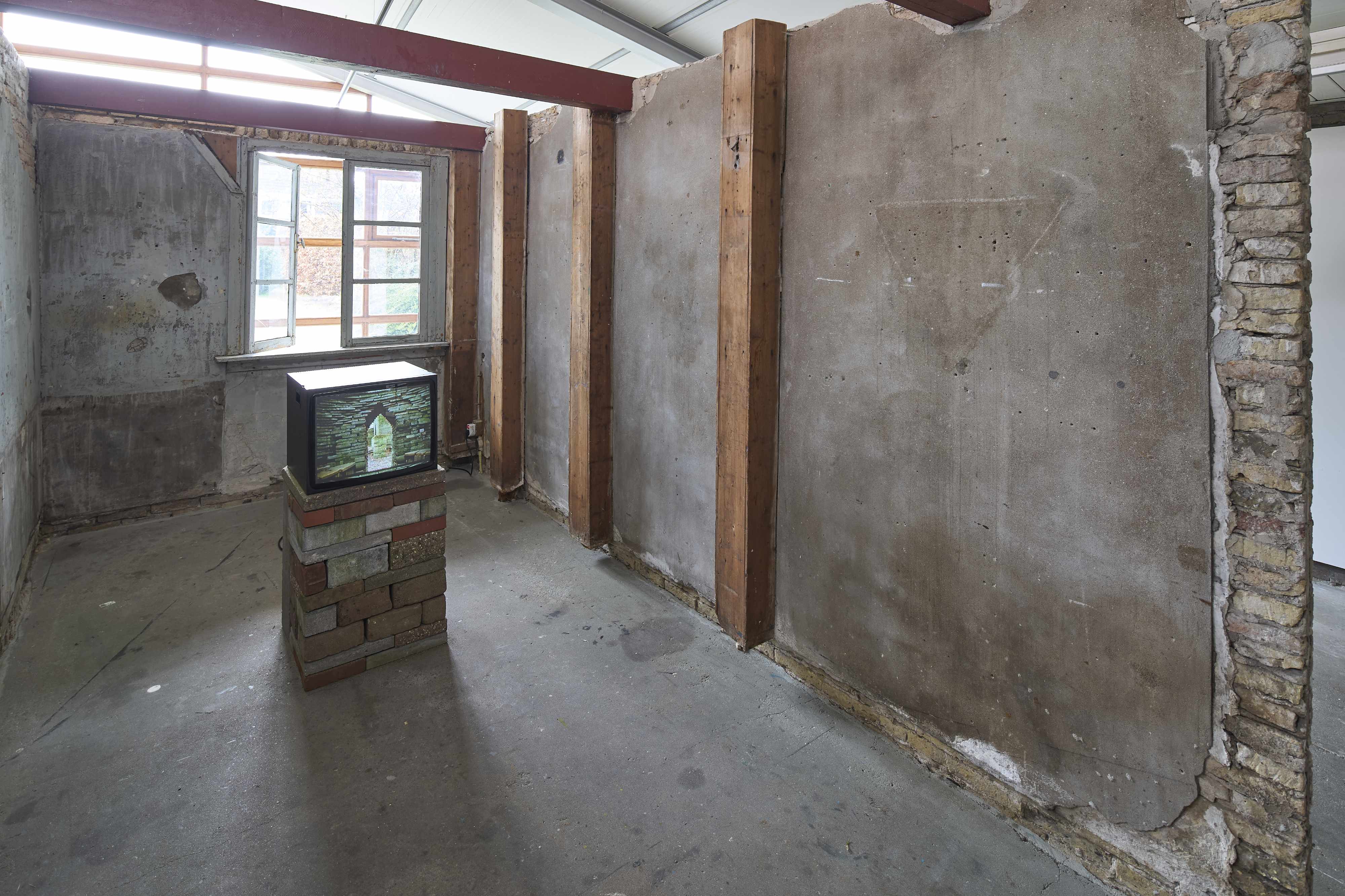
These are the questions I kept in mind going into Winnie Herbstein’s installation at Casco Art Institute: Working for the Commons. One of three presentations in the exhibition, “move not for reason but love,” Herbstein’s installation is also extended into a second part at Kunsthuis SYB in Friesland
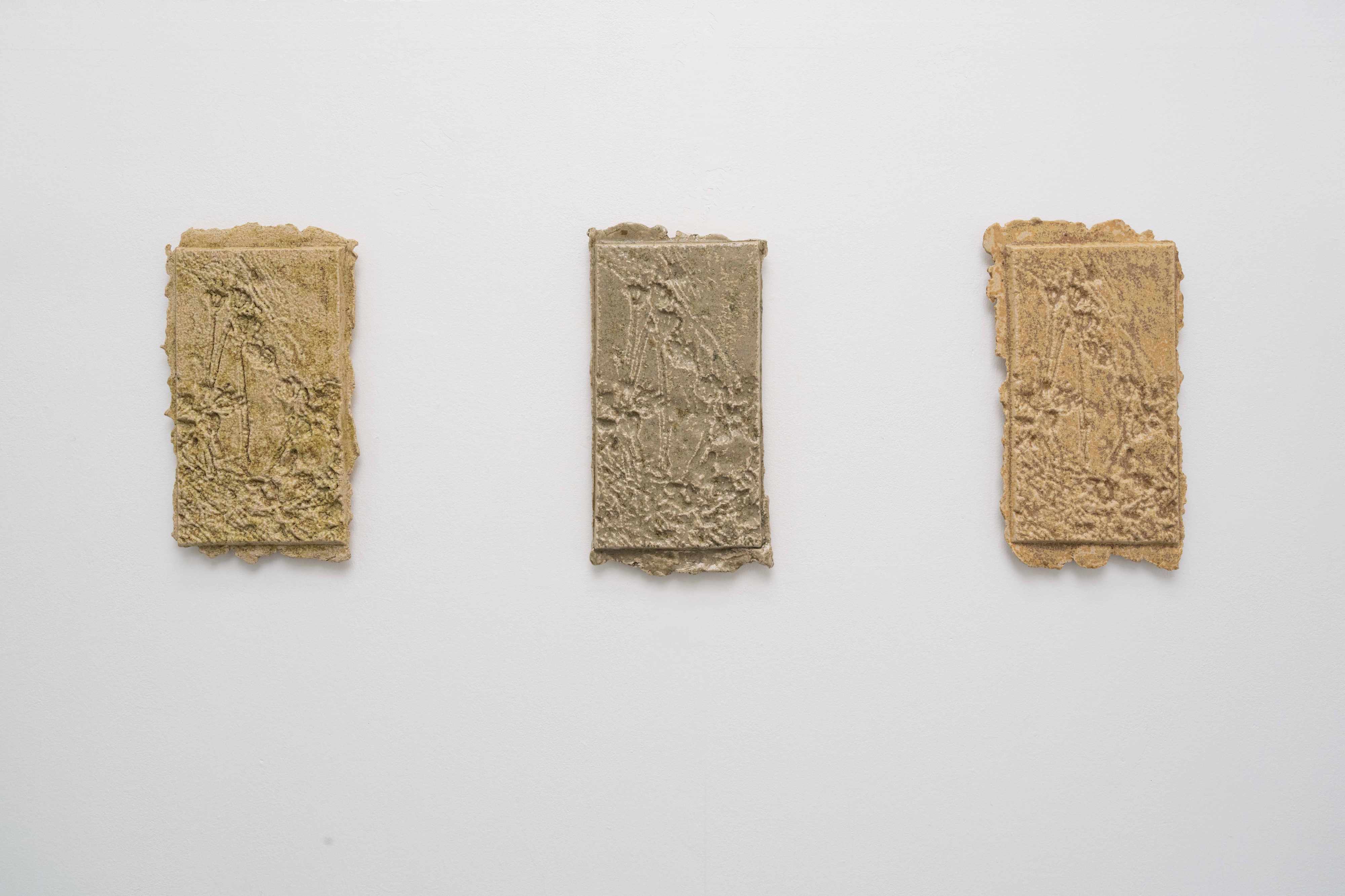
I went up to the first floor, to the room housing Herbstein’s work. To the left, two rectangular ceramic forms cling to the wall, referencing asbestos and the speckled mould spores often found on it. We are directly on theme. Herbstein links asbestos to the idea of living together, to forms of toxicity embedded within the structures people inhabit collectively. Asbestos stays hidden in the walls and only becomes visible once the house is altered or disturbed. At Kunsthuis SYB, Herbstein extends this logic to other materials too, such as lead; substances woven into domestic architecture while sneakily poisoning those who live alongside them. Subtle deaths, changes under the same roofs; from Utrecht to Friesland.
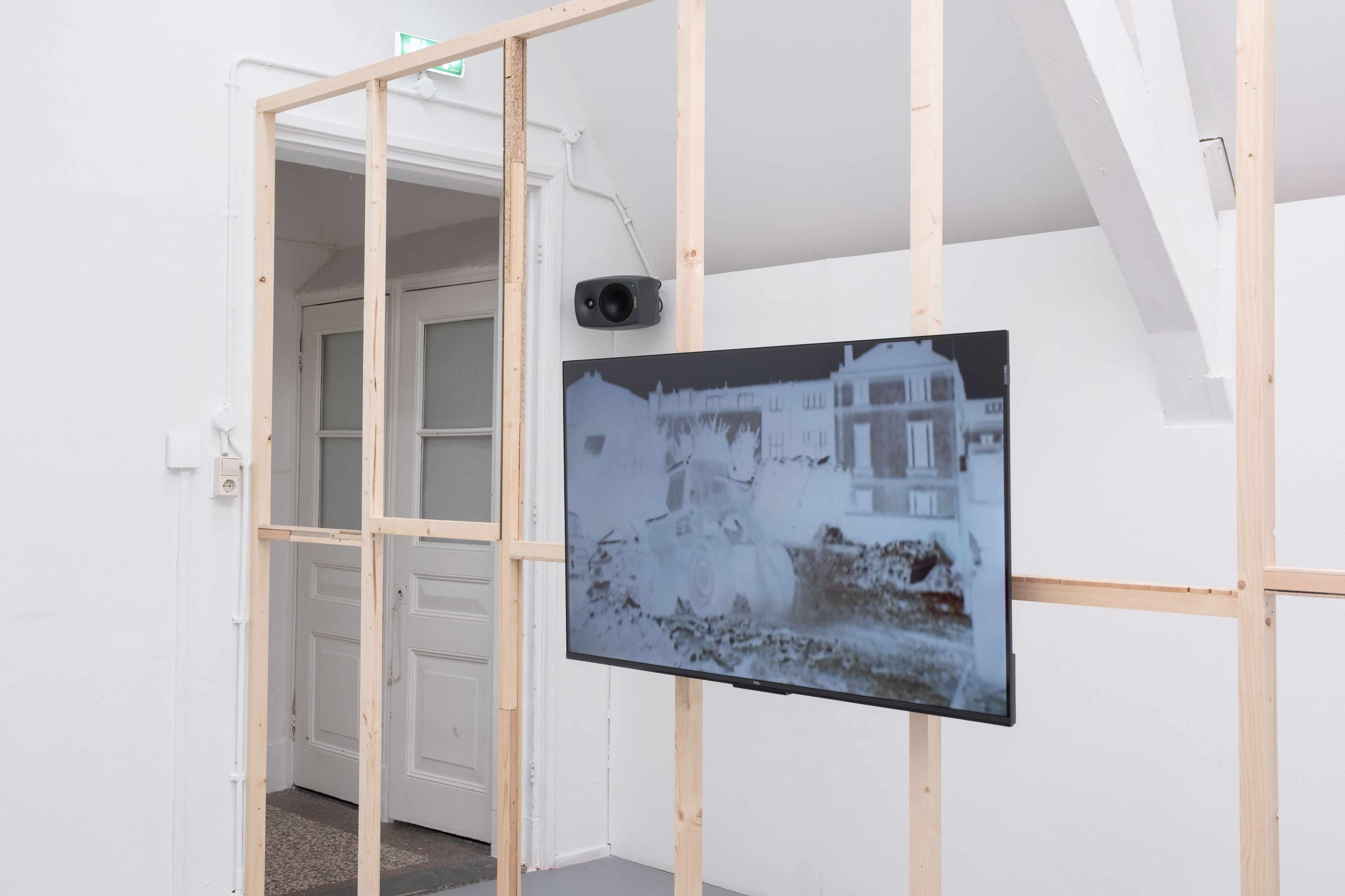
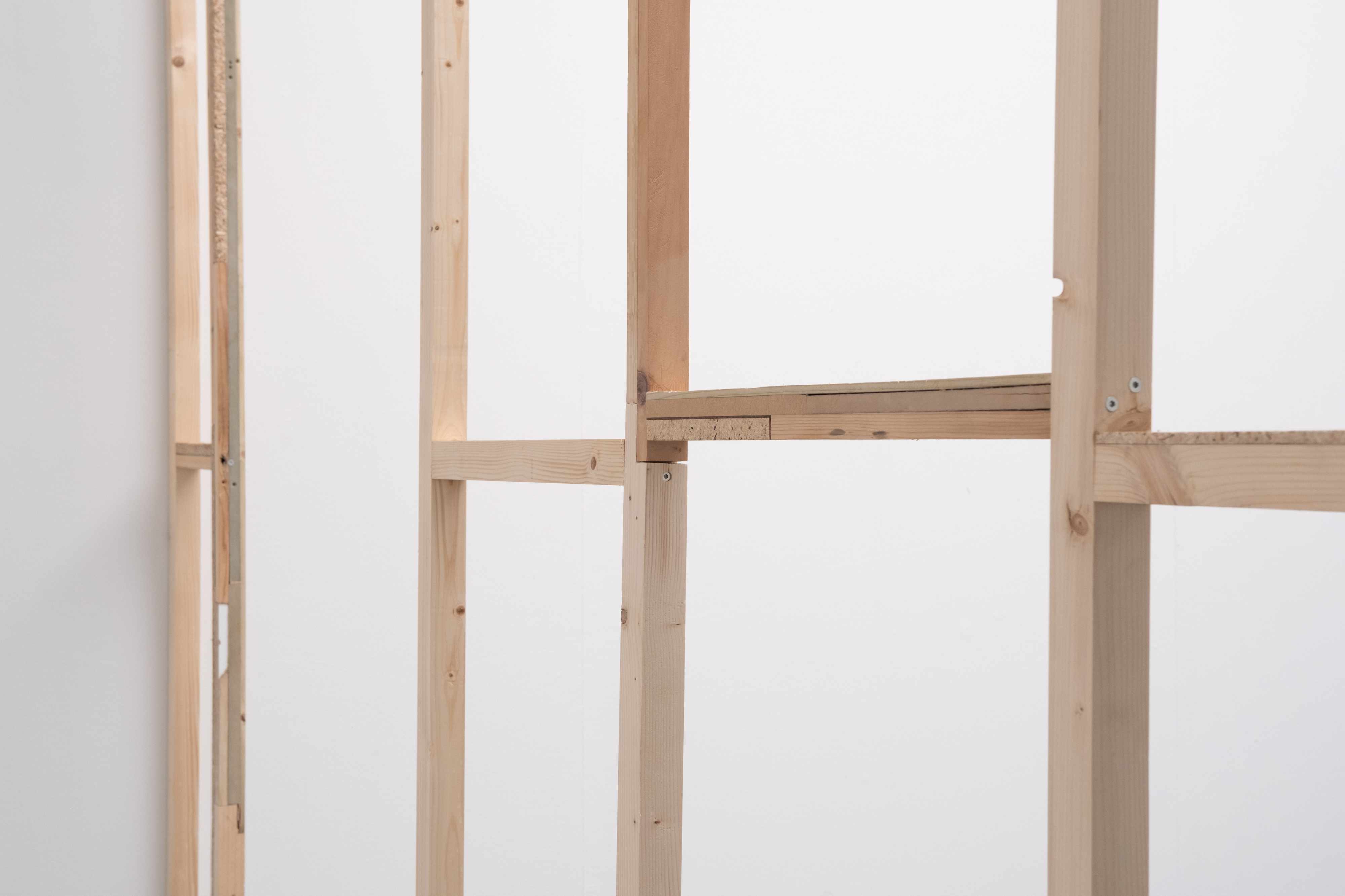
To the right side of the room, a small screen fixed to a wooden barrier with chairs facing it plays a seven-minute film on loop. The chairs are mismatched, arranged neither in a straight line nor in a proper semi-circle, but in an effortless configuration that mirrors the film's abstract and clouded conversations. The film We Need to Speak about Living Room (2026), the core of the installations at Casco and Kunsthuis SYB, is impossible to detach from the Dutch housing context in which it was created. In Amsterdam and Utrecht, there exists a genealogy of living together that is both steady and sincere. There is nostalgia among older squatters and city hippies for the 1980s and 1990s: Amsterdam felt less polished, Zeedijk was rougher, Central Station more gangster. Today, the city feels flatter, and the housing crisis has only worsened. The city is attractive, “dynamic”; and once a city starts being called dynamic, you know it is already too late to move there. Dynamism is perhaps a synonym for being dynamized, dynamited, by yuppies.
As time passes, the idea of living together feels utopian. Financial precarity might make communal living more necessary, as a survival strategy. Or it might make it more impossible, because people are too exhausted just trying to survive. They want to exit cities. Or rot, by themselves, in the living room.
Herbstein’s film draws on family constellation therapy as a method. Participants are assigned roles that represent different elements of a system: family members, abstract concepts such as capitalism or racism, even concrete things like a house or a job. In the film, actors take on different roles and improvise their way through scenarios rooted partly in conversations with people who have lived in squats and woongroeps across the Netherlands, and partly from recurring archetypes Herbstein had encountered herself within collective living situations. The actors were given characters and parameters, but the conversations themselves were left open. A facilitator and mediator, Harriet Bergman, also participated in the process, guiding discussions over the course of a day.
The film centers on six people living in a woongroep in Utrecht, trying to figure out how to cohabitate in a way that aligns ethically with who they are without exhausting one another. They come from different cultural backgrounds and generations, all united by shared housing rooted in decolonial, ecological and political commitments. The film is driven by the relationship between thought and praxis: how do ideas about collective living translate into everyday material reality?
The structure alternates between archival footage, images of Utrecht, squats and housing collectives and conversations among the group. Visually, the film is also quite spare and simple: people seated in an arrangement that mirrors the one at Casco, with mismatched chairs and couches. The tone of the film is observational, perhaps even non-confrontational. The camera records conversations while positioning itself slightly outside the debate. If someone stands up and leaves the room, the camera does not follow them too closely, vulturishly trying to capture emotion.
The film begins with a letter read aloud: a developer's notice to vacate the property, with financial compensation and alternative housing offered. The question emerges: should they continue living together on the property, or move out individually? For some, the answer seems obvious. The compensation is attractive; the idea of continuing indefinitely less so. The oldest member of the group, also the most recent to join, firmly refuses. He wants to stay. Another participant wonders whether leaving would mean that they are “selling out.”
The constellation therapy exercise begins. It seems made to help them move past tensions and blockages. Participants take on roles and name tags: “disruptor,” “witness,” and so on, guided by a mediator. Conflicts unfold. Someone is accused of lacking initiative; the word “lazy” is proposed, then questioned. The group turns, at times, against “the Architect,” who is seen as financially more stable than the rest, yet less engaged in making this house a home. Another participant points out that calling people out without structures of care and repair is counterproductive. At one point, the discussion turns to something mundane: washing dishes. And suddenly everything becomes concrete. Surely this cannot be the reason for dismantling the group? Or can it? When is something treated as a conflict, and who decides that?
The group's unhappiness is not immediately obvious. The letter functions as a pretext, a rupture, excavating tensions and dissatisfactions that had already been accumulating. For much of the film, I wondered what exactly had gone wrong between them. The answer may be as small, as mundane, as domestic as dishes. But it’s never just dishes, is it? Ideological conflicts meet logistics, meet questions of who cleans, who pays, who stays. It made me think about labor distribution and the invisible hierarchies of care work, of the fact that what counts as care in one tradition might read as disrespect in another, of the generational gaps playing out.
The intellectualization of conflict keeps me watching; the film shows people turning potential fights and tensions into poised discussions. But if conflict is endlessly processed rather than acted upon, what happens to it? Does it dissolve? Where does it dissolve? Part of me wanted to witness a cathartic moment from one of the members. But I’d like to think Herbstein deliberately witholds this catharsis, to not fall into the trap of a good vs. bad thesis on communal living. There is something unresolved there that I appreciated.
Herbstein's film does not pretend to moralize the housing crisis debate, nor to offer a clear account of communal living. It is precise, situated, human and realistic. In theory, living together is appealing; in practice, it’s just not that easy, even among people who believe in the same things, who want to live the same way. Some have money and others do not. Some carry the work and others avoid it. Towards the end of their therapy exercise, the group considers solutions: a two-day retreat, collective joyful activities, mediated conversations. But we quickly understand there is no simple resolution as there is no simple problem.
“We Need to Speak About Living Room” is the last line of a June Jordan poem. When talking about it with Herbstein, she outlined the many meanings the phrase takes on for her, before explaining: “And it stands both for the structure of the space in which people gather within the house, but it's also room to live, which is also under question in the current climate.”
It is time to make my way home. It is time to make our way home. For the time being, to Amsterdam, to a self-contained house in the Jordaan, that I share with a flatmate, for the time being.